Hyundai Aura : I remember the first time I saw the Hyundai Aura pull up at a traffic signal back in 2020. It had that fresh, boot-extended vibe of the Grand i10 Nios but with a proper sedan’s poise.
Fast forward to early 2026, and this little workhorse is still turning heads in Indian cities, especially with rising fuel costs making its CNG variants a smart pick.
Recent Buzz Keeps It Relevant
Hyundai hasn’t let the Aura fade into the background. Just last month in January 2026, enthusiasts were buzzing about the updated Aura S CNG model, with detailed walkarounds highlighting tweaks to the exterior, interior upgrades, and better CNG boot space.
Back in July 2025, the company rolled out new variants loaded with extra features like enhanced safety tech and connectivity options.
These incremental updates show Hyundai’s commitment to keeping the Aura competitive without a full facelift just yet.
The February 2025 launch of the Corporate trim at around Rs 7.48 lakh targeted fleet buyers and value hunters, proving the sedan still has broad appeal.
Sales figures back this up—in December 2025, it moved 4,925 units despite a slight monthly dip, and August saw a healthy 24% year-on-year jump to 5,336 units, thanks to popular SX trims.
In a market tilting toward SUVs, the Aura’s steady performance feels like a quiet rebellion.
Design That Ages Gracefully
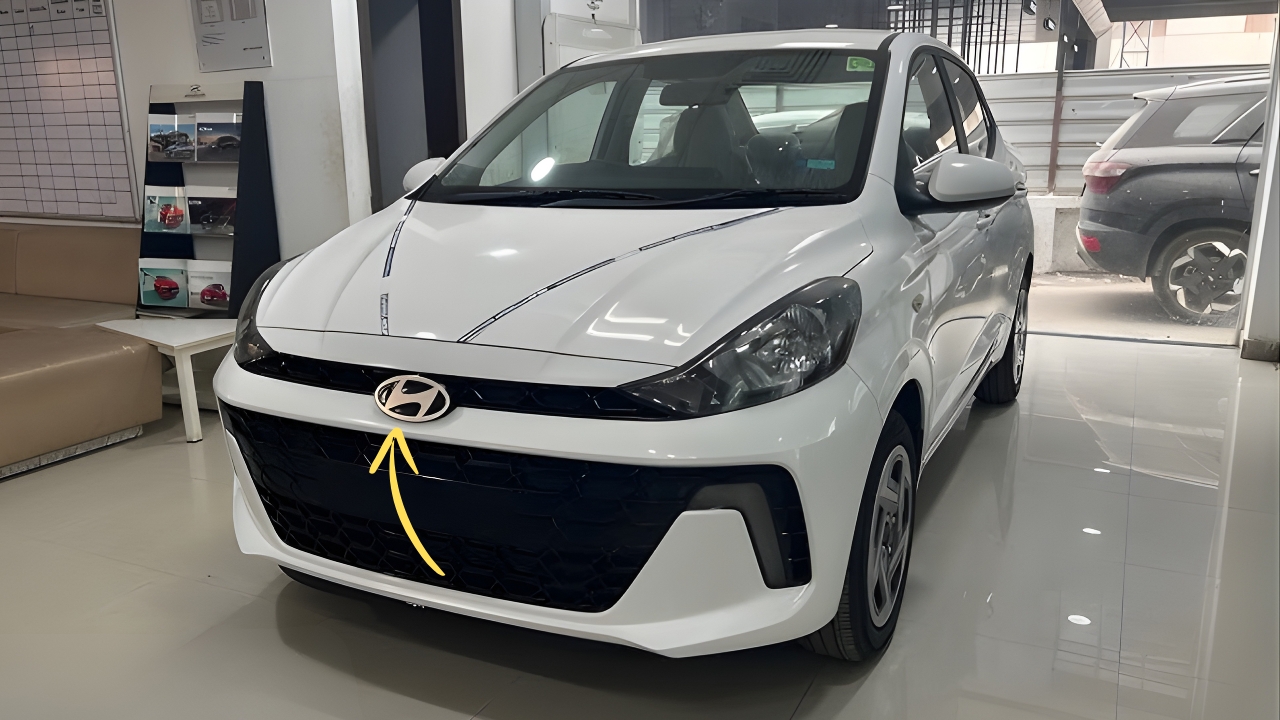
Slide behind the wheel of a 2026 Aura, and the design still feels modern. The front fascia, refreshed in the 2023 facelift, sports a bold blacked-out grille flanked by inverted L-shaped LED DRLs that give it a sharper, more aggressive stance—no fog lamps, but the look works.
At the rear, Z-shaped taillamps and a subtle spoiler add sportiness, while 15-inch diamond-cut alloys on SX variants elevate the profile.
Inside, the dual-tone cabin with copper accents and honeycomb patterns on the dash feels premium for the price. Plastics are hard but well-assembled, no rattles in sight after my test drives.
The sloping roofline might cramp headroom for six-footers in the back, but legroom and rear AC vents keep families happy.
Boot space? A generous 402 liters swallows weekend luggage with ease, even in CNG guise where the tank integration is smarter now.
Powertrains for Every Wallet
Under the hood, the 1.2-liter Kappa petrol churns out 83hp and 114Nm, smooth for city crawls and highway cruises up to 100kmph—beyond that, plan overtakes carefully.
Paired with a 5-speed manual or AMT, it sips fuel at 17kmpl ARAI, real-world around 12-14 in traffic.
The CNG bi-fuel version drops to 69hp/95Nm but shines at 28km/kg claimed, real-world 20-22km/kg, perfect for high-mileage commuters.
I’ve driven both, and the petrol AMT edges out for ease in bumper-to-bumper chaos, while CNG owners rave about wallet-friendly runs—30km/kg isn’t unheard of on open roads.
No turbo or hybrid yet, but with Hyundai’s EV push, whispers of electrified options linger for later 2026.
Packed with Features, No Frills Skipped
Hyundai loads the Aura sensibly. Base E gets six airbags—standard across the board, a segment win—as well as ABS, EBD, and rear sensors.
Step up to SX for an 8-inch touchscreen with wired Android Auto/Apple CarPlay (wireless on SX(O)), cruise control, wireless charging, and auto AC.
ESC and hill-hold assist join from S AMT upward, with TPMS and rear camera in higher trims.
No sunroof or 360-cam like rivals, but push-button start and Type-C ports feel current. In my book, it’s functional luxury without gimmicks.
Pricing and Variants Breakdown
Ex-showroom prices kick off at Rs 5.98 lakh for the E petrol MT, climbing to Rs 8.54 lakh for top SX CNG. On-road in Delhi?
Expect Rs 6.67-9.94 lakh. Key picks: S CNG at Rs 7.76 lakh for value, SX petrol at Rs 7.64 lakh for features.
Corporate editions suit cab operators, while SX(O) tempts enthusiasts with alloys and premium touches. Post-GST tweaks in late 2025 shaved up to Rs 78k off, making it even sharper.
Holding Strong Against Rivals
In the sub-4m scrum, Maruti Dzire leads with 24kmpl+ mileage and a 5-star rating, but its 3-cylinder drone annoys.
Honda Amaze offers refinement and ADAS hints, yet skips CNG and costs more up top. Tata Tigor brings safety cred but lags in polish.
Aura wins on refinement, boot space, and CNG practicality—ideal for urban India where sedans still rule fleets and families. Sales resilience proves it.
Driving Impressions from Real Roads
On pothole-riddled Panipat streets—my backyard—the Aura’s soft suspension soaks up bumps without wallowing.
Steering is light, perfect for U-turns, and brakes bite progressively. Highway stability impresses till 120kmph, though wind noise creeps in.
CNG mode feels peppy in town, petrol for spirited jaunts. Ride quality rarely disappoints, a boon for new drivers or long commutes.
The Road Ahead for Aura
Rumors swirl of a 2026 facelift with bolder looks and maybe a sunroof, aligning with Hyundai’s hybrid plans.
Diwali 2025 deals offered up to Rs 95k off siblings, hinting at similar Aura perks now. With SUVs dominating, Aura’s affordability and efficiency keep it vital.
Also read this : 2026 Toyota Innova Hycross – Powerful engine MPV launched with 27Kmpl mileage at ₹17Lakhs
Hyundai Aura
The Hyundai Aura in 2026 remains a smart, no-nonsense compact sedan that punches above its weight in refinement, safety, and running costs.
Whether you’re a city commuter eyeing CNG savings or a family needing reliable wheels, it delivers without drama.
In a shifting market, its enduring appeal reminds us why sedans endure—practicality over hype. If you’re scouting, test drive one; it might just steal your heart like it did mine years ago.